
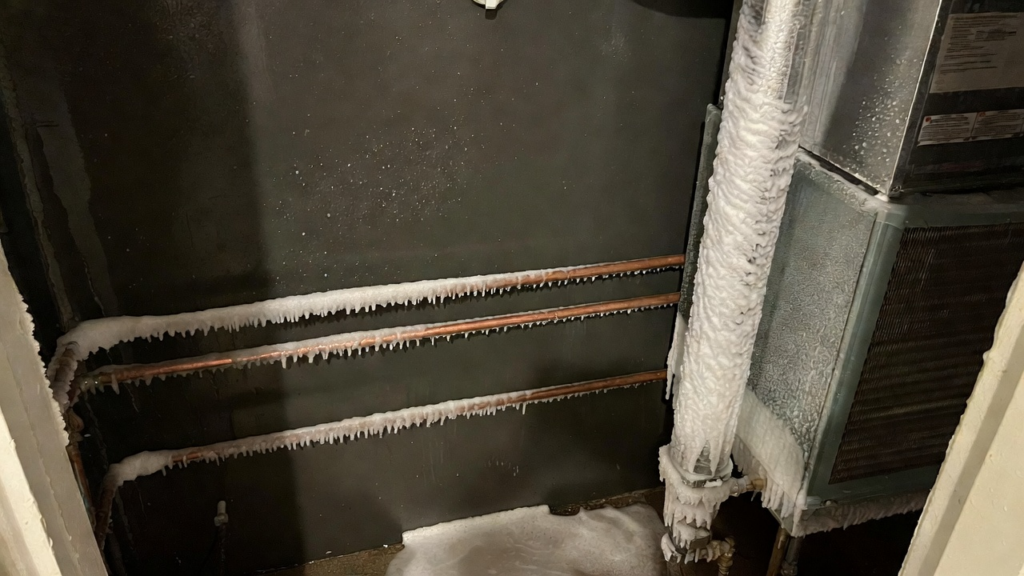
There are few home comfort surprises more disorienting than walking past your air handler on a hot July afternoon in Grand Rapids and finding it covered in ice. The refrigerant lines are frosted over, warm air is coming from the registers despite the system running, and your first instinct is that something has gone seriously wrong. West Michigan summers can push into the mid-80s with humidity that makes every degree count, and a frozen AC at the wrong moment can make your home genuinely uncomfortable for the entire afternoon.
The good news is that a frozen air conditioner does not always signal a major or expensive repair. Many cases of AC freeze-up trace back to causes that are straightforward to address and, in some situations, fixable without a service call. Understanding why the freeze happened is the essential first step toward knowing whether you can resolve it with a filter change and a few hours of patience, or whether you need a professional to evaluate the system.
This guide walks Greater Grand Rapids homeowners through the most common reasons an AC unit freezes up, exactly what to do the moment you discover ice on your system, and how to distinguish a simple fix from a problem that requires professional attention. If your system needs service after working through these steps, the air conditioning team at Grapids Home Services is ready to help.
Start Here: What to Do the Moment You Find Ice on Your AC
The first and most important action when you discover a frozen AC is to stop running the cooling cycle immediately. Continuing to run a frozen system forces the compressor to operate under conditions it was not designed for, which can accelerate wear on one of the most expensive components in your air conditioner. Do not simply switch the thermostat off, however. Instead, set it to Fan Only mode. Fan Only keeps the blower motor running to circulate warm room-temperature air across the frozen coil, which speeds the thawing process significantly compared to shutting the system down entirely.
While the system thaws, place towels around the base of the air handler. A frozen AC unit can accumulate a significant amount of ice, and as it melts, that water needs somewhere to go. Check the condensate drain pan beneath the unit and make sure it is draining properly. If the pan is full or the condensate drain line appears clogged, the meltwater will overflow and can damage surrounding structures. A cup of diluted white vinegar poured into the condensate drain access port can break up algae and debris that commonly restrict the line in Greater Grand Rapids homes during the humid summer months.
Plan on the thaw taking one to three hours depending on how much ice has built up. Do not attempt to chip or scrape ice off the coil with any tool. The evaporator coil fins are thin aluminum that bend easily, and physical removal of ice can damage the coil surface in ways that are expensive to repair. Let the fan do the work, check progress periodically, and wait until the refrigerant lines are no longer cold to the touch before switching back to cooling mode.
Why Air Conditioners Freeze Up: The Two Root Causes
Every case of a frozen AC ultimately comes down to one of two problems: insufficient airflow across the evaporator coil, or an insufficient refrigerant charge. The evaporator coil inside your air handler operates at a specific temperature range. When airflow drops too low or refrigerant pressure falls below the normal range, the coil surface drops below freezing and moisture in the circulating air condenses and freezes on contact.
Airflow restriction is the more common and more easily resolved cause. Your HVAC system is designed to move a specific volume of air continuously across the evaporator coil. A clogged air filter, closed supply or return vents, a failing blower motor, or even furniture blocking a return air grille can reduce that airflow enough to create the temperature conditions that cause freezing. Identifying and correcting the airflow restriction is the first thing to investigate after you discover ice on your system.
A refrigerant issue is the more serious cause. Unlike airflow problems, a low refrigerant charge almost always indicates a leak somewhere in the system, since refrigerant is not consumed during normal operation. Running an undercharged system without repairing the leak leads to repeated freezing, higher electricity bills as the compressor runs longer trying to compensate, and eventual compressor damage if the problem is left unaddressed. Refrigerant handling requires EPA Section 608 certification, so if you suspect a refrigerant issue, professional service is required.
Restricted Airflow: The Most Common Cause in West Michigan Homes

A dirty or clogged air filter is the single most frequent cause of a frozen AC unit in Greater Grand Rapids homes, and it is also the most straightforward to fix. During West Michigan’s cottonwood season in late May and early June, and during the heavy oak and maple pollen weeks that precede it, residential air filters can load up significantly faster than the manufacturer’s suggested replacement interval. A filter that looked acceptable when you checked it in March may be fully saturated by the time cooling season starts in earnest in late May.
Pull your filter out and hold it up to a light source. If you cannot see light passing through it cleanly, replace it before restarting the system in cooling mode. After installing a fresh filter, allow the full thaw to complete before switching back to cooling. If the system freezes again within a day or two after a fresh filter installation, the cause lies elsewhere and a service call is warranted.
Closed or blocked supply and return vents are a common secondary cause that many homeowners overlook. Walk through every room in your home and confirm that all supply registers and return air grilles are open and unobstructed. Furniture pushed against a return grille, curtains draped over a supply register, or rooms with vents closed to save energy all reduce the total airflow volume the system needs to operate correctly. Many Greater Grand Rapids homeowners also discover that rugs over floor registers, a common feature in older homes with floor-mounted vents, are significantly reducing airflow without their realizing it.
Low Refrigerant: When Ice Signals a Bigger Problem
Ice on your AC unit combined with warm air from the registers, a hissing or gurgling sound from the indoor air handler, and energy bills that have been creeping higher over the past cooling season together form a pattern that strongly suggests a refrigerant leak. Low refrigerant causes the evaporator coil to operate at abnormally low pressure, which drops the coil surface temperature below freezing even when airflow is adequate. The system runs longer and longer cycles as it tries to reach the set temperature, drawing more electricity and putting mounting stress on the compressor.
A refrigerant issue will not resolve on its own and requires a licensed HVAC technician with EPA Section 608 certification to address legally. Refrigerant is a regulated substance under federal environmental law, and simply adding refrigerant without finding and repairing the source of the leak is both an incomplete fix and an environmental violation. A qualified technician will use electronic leak detection equipment to locate the leak, repair it, verify the repair, and then recharge the system to the manufacturer’s specified pressure and charge weight.
If your system is more than 10 years old and requires a significant refrigerant recharge, it is worth asking your technician to walk through the replacement option with you at the same time. Older systems using R-22 refrigerant, which was phased out of production, carry especially high recharge costs because the supply of R-22 is limited and expensive. Replacing the system with a modern unit eliminates ongoing refrigerant costs and delivers substantially lower operating costs through improved efficiency.
Other Contributing Factors: Dirty Coils, Failing Components, and Improper Use
Even with a clean filter in place, the evaporator coil itself can accumulate a thin layer of dust and debris over time. This layer reduces the coil’s ability to absorb heat from circulating air, which lowers coil temperature and can contribute to freezing. Coil cleaning is typically part of a professional AC tune-up and is not a DIY task, since the cleaning agents and fragile coil fins require careful handling. If your system has not had a professional tune-up that included coil cleaning within the past one to two years, scheduling one before the next cooling season is worthwhile.
A failing blower motor or a worn run capacitor can reduce airflow to the point where the coil begins to freeze. If your air handler sounds labored or you notice that airflow from the supply registers has weakened compared to previous seasons, the blower motor or capacitor may be losing performance. Both components are diagnosable during a service visit and are typically much less expensive to address than compressor replacement when caught before they fail completely.
Running your air conditioner during cooler outdoor temperatures is a less obvious but real cause of freezing in West Michigan. AC systems are designed to operate when outdoor temperatures are above approximately 60 degrees Fahrenheit. Running the system on a cool night in late May or early September, when outdoor temperatures drop into the low 60s or below, can cause the refrigerant circuit to underperform and the coil to freeze even without a refrigerant issue. Most Greater Grand Rapids nights in the shoulder seasons do not require air conditioning, and turning the system off when outdoor temperatures drop into the low 60s prevents this scenario entirely.
Preventing Future Freeze-Ups in Your Greater Grand Rapids Home
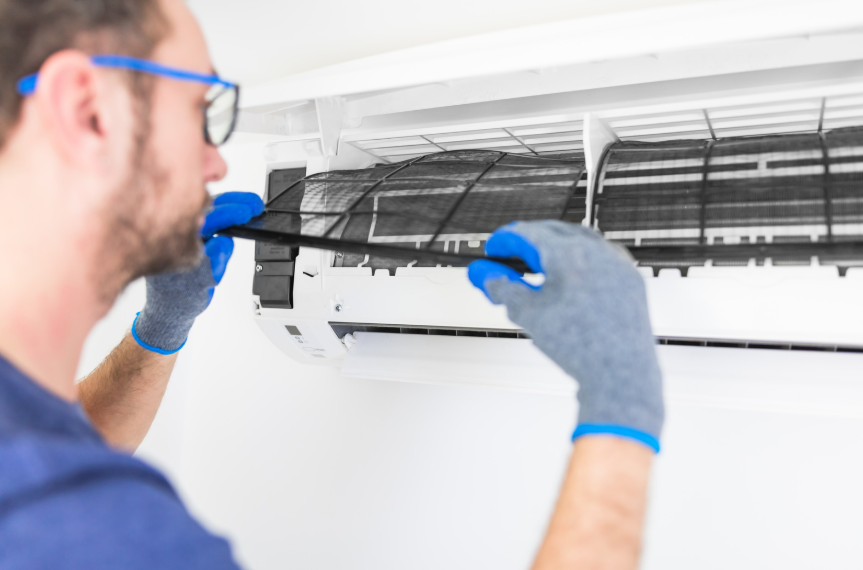
Regular maintenance is the most effective way to avoid AC freeze-ups. Replacing the air filter on a consistent schedule, checking every three to four weeks during the cooling season and replacing when the filter appears gray or loaded, removes the most common cause before it becomes a problem. Setting a recurring phone reminder is more reliable than remembering to check, and a clean filter is cheap insurance against a frozen system on the hottest day of a Grand Rapids summer.
Scheduling a professional AC tune-up each spring before the cooling season begins allows a technician to verify refrigerant charge, clean the evaporator coil, inspect the blower motor and capacitor, and clear the condensate drain line. This annual visit catches the developing conditions that lead to freeze-ups before they cause a problem during peak cooling season. Call Grapids Home Services at (616) 210-3456 to schedule your spring tune-up.
Keeping all supply and return vents open throughout the home, not blocking return grilles with furniture, and being mindful of when outdoor temperatures are cool enough that the AC can be turned off rather than left running overnight are all habits that reduce freeze risk at no cost. In older Greater Grand Rapids homes with limited duct insulation, checking that supply ducts in unconditioned spaces are intact and not leaking is also worthwhile, as duct leakage reduces total airflow and can contribute to the conditions that cause coil freezing.
When to Call an HVAC Professional in Greater Grand Rapids
Some AC freeze situations resolve completely after a filter change and a full thaw cycle. Others point to problems that require professional tools and training to diagnose safely. Call a licensed HVAC technician if the system refreezes within a day or two after replacing the filter and ensuring all vents are open. Call if you hear hissing, gurgling, or bubbling sounds from the air handler, which often indicate a refrigerant leak. Call if the circuit breaker trips when you restart the system after thawing. Call if your system is more than 10 years old and has experienced multiple freeze events over the past two or three cooling seasons, as this pattern suggests cumulative wear that is better addressed proactively than reactively during an emergency.
Attempting to operate an AC system that keeps refreezing without addressing the underlying cause adds compressor wear with each cycle and can turn a manageable repair into a compressor replacement or full system replacement. Getting a diagnosis early in the season is almost always less expensive than waiting until the problem forces a breakdown.
Grapids Home Services provides AC repair and maintenance throughout Grand Rapids, Wyoming, Kentwood, Grandville, Jenison, Lowell, and communities across Kent and Ottawa counties. Call us at (616) 210-3456 for prompt service.
Frequently Asked Questions
Why is my AC freezing up even though it was working fine last summer?
Air conditioners can develop problems gradually. A refrigerant charge that was borderline adequate last season may have dropped below the functional threshold this year due to a slow leak. A filter that was replaced regularly last summer may have been overlooked during the spring. A blower motor capacitor that was weakening last year may now be causing performance problems. If your system was fine recently and is now freezing without an obvious cause like a heavily clogged filter, a service call to check refrigerant charge and electrical components is the appropriate next step.
Can I run my AC if only part of the coil is frozen?
No. Even partial freezing on the evaporator coil indicates an underlying problem, and continuing to run the system in cooling mode will worsen the freeze and stress the compressor. Switch to Fan Only mode, let the coil thaw completely, and address the underlying cause before resuming cooling operation. Running through repeated partial freeze and thaw cycles without identifying and fixing the root cause is one of the more reliable ways to shorten your compressor’s service life.
How long does a frozen AC take to thaw?
With the system switched to Fan Only mode, a moderately frozen AC coil typically thaws in one to three hours. A unit with heavy ice accumulation extending along the refrigerant lines may take longer. Switching the system completely off will also eventually thaw the coil, but Fan Only mode speeds the process by actively moving warm room air across the frozen surface. Do not use any heat source or tool to accelerate the thaw manually.
Is a frozen AC unit dangerous?
A frozen AC is not immediately dangerous in the way a gas leak or electrical fault would be, but it should not be ignored. Allowing meltwater to overflow the condensate drain pan can cause water damage to flooring, drywall, and building materials. Running a frozen system continuously risks compressor damage. And if the underlying cause is a refrigerant leak, the leak itself warrants professional attention both for safety and for environmental compliance reasons.
Does a frozen AC use more electricity?
Yes. When the evaporator coil is partially frozen, the system cannot transfer heat efficiently and runs longer cycles trying to reach the thermostat’s set temperature. The compressor draws higher current under these conditions. A system that has been partially frozen and struggling for several days before it was discovered can add meaningfully to your electricity bill over that period, in addition to the compressor wear it accumulates.
How do I know if my AC refrigerant is low?
Signs of low refrigerant include ice forming on the refrigerant lines near the indoor unit, a hissing or gurgling sound from the air handler during operation, a home that never cools to the set temperature despite the system running continuously, and electricity bills that are noticeably higher than the same period in prior years. A licensed HVAC technician can measure system pressure with manifold gauges to confirm low charge during a service visit and determine whether a leak repair and recharge is needed.
About Grapids Home Services
Grapids Home Services has been helping Grand Rapids and West Michigan homeowners keep their homes comfortable and running smoothly with expert plumbing and HVAC services. From air conditioning repair and tune-ups to furnace service, heat pump installation, indoor air quality solutions, and comprehensive plumbing, our licensed team brings the experience and local knowledge that West Michigan homeowners trust. We serve Grand Rapids, Wyoming, Kentwood, Grandville, Jenison, Lowell, and communities throughout Kent and Ottawa counties.
Call Grapids Home Services at (616) 210-3456 to schedule service today.