
A sewer line rarely fails without warning. Long before raw sewage backs up into a basement floor drain or a yard suddenly smells like a treatment plant, your home has been quietly signaling that the main line is struggling. Most West Michigan homeowners miss those early signs because they look like minor nuisances, a gurgle here, a slow drain there, until the problem turns into a weekend emergency call.
Older neighborhoods around Grand Rapids, East Grand Rapids, Wyoming, and Kentwood face this risk more than most. Mature trees, original clay or cast iron sewer laterals, and decades of freeze-thaw cycles all work against your pipes. Catching the warning signs early means a routine cleaning instead of an excavation, and a normal week instead of a flooded basement.
Key Takeaways
- Sewer line trouble usually shows up as multiple slow drains, gurgling, or odors well before a full backup.
- West Michigan homes built before the 1980s often have clay or cast iron sewer laterals that are especially vulnerable to root intrusion.
- Hydro jetting clears grease, scale, and root mass that mechanical snaking only punches through.
- A sewer camera inspection is the only way to confirm what’s happening inside the line and whether cleaning will fix it.
- Most homes benefit from preventive sewer line cleaning every 18 to 24 months, sooner if tree roots or older pipes are involved.
Why Sewer Lines in West Michigan Need Cleaning More Often Than You’d Think
West Michigan plumbing faces a combination of conditions that accelerate buildup inside main sewer lines. Many homes in Grand Rapids and surrounding communities were built between 1900 and 1970, when clay tile and cast iron were the standard for sewer laterals. Both materials are durable, but neither is sealed against the long, slow work of tree roots searching for moisture.
Roots find the smallest joint gap, push through, and create a snag point. Toilet paper, grease, and soap scum catch on that snag, and over months or years the line narrows. Add Michigan’s freeze-thaw cycles, which shift soil and stress old pipe joints, and the result is a sewer line that accumulates restriction much faster than newer PVC systems.
Newer homes in places like Caledonia, Cascade, and Hudsonville often use PVC laterals that resist roots, but they still collect grease, hair, and mineral scale from hard water. No sewer line is maintenance-free. The only question is whether you catch the buildup early or wait until it stops your drains entirely. If you’re noticing repeat issues, our professional drain services team handles diagnosis and cleaning across West Michigan.
Slow Drains in Multiple Fixtures at Once
A single slow drain almost always means a localized clog, hair in a bathroom sink, food in a kitchen drain, soap scum in a tub. The fix is usually limited to that one fixture. But when two or more drains slow down at the same time, the problem moves downstream into the main sewer line.
Watch for these patterns:
- The kitchen sink drains slowly while the basement floor drain also gurgles.
- Both bathrooms upstairs start backing up within days of each other.
- Flushing a toilet causes the tub or shower drain to bubble.
That last sign is especially telling. When water leaves a toilet and forces air or water up through a nearby drain, the main line is partially blocked downstream of both fixtures. It’s no longer a fixture problem. It’s a sewer line problem, and snaking one drain won’t solve it.
Gurgling Sounds From Toilets and Drains
Healthy plumbing moves water and air smoothly. A properly vented system lets air in through roof vents so wastewater can drain without creating suction. When the main line restricts, air gets trapped and has to escape somewhere, and that somewhere is usually the nearest fixture.
Gurgling toilets after a load of laundry runs, a bubbling sound from the kitchen sink after the dishwasher drains, or a tub that burps when the upstairs toilet flushes all point to the same issue. Air is finding the path of least resistance because the main line can’t move volume the way it should. This is one of the earliest signs of a restricted sewer line, and it usually shows up weeks or months before any actual backup occurs.
Foul Odors Coming From Drains or the Yard
Sewer gas has a distinctive smell. Sulfurous, swampy, unmistakably wrong. Inside the home, that smell usually escapes through a drain trap that has dried out, a wax ring failure under a toilet, or a vent issue. But persistent sewer odor from multiple drains, even after running water to refill traps, points to something further down the line.
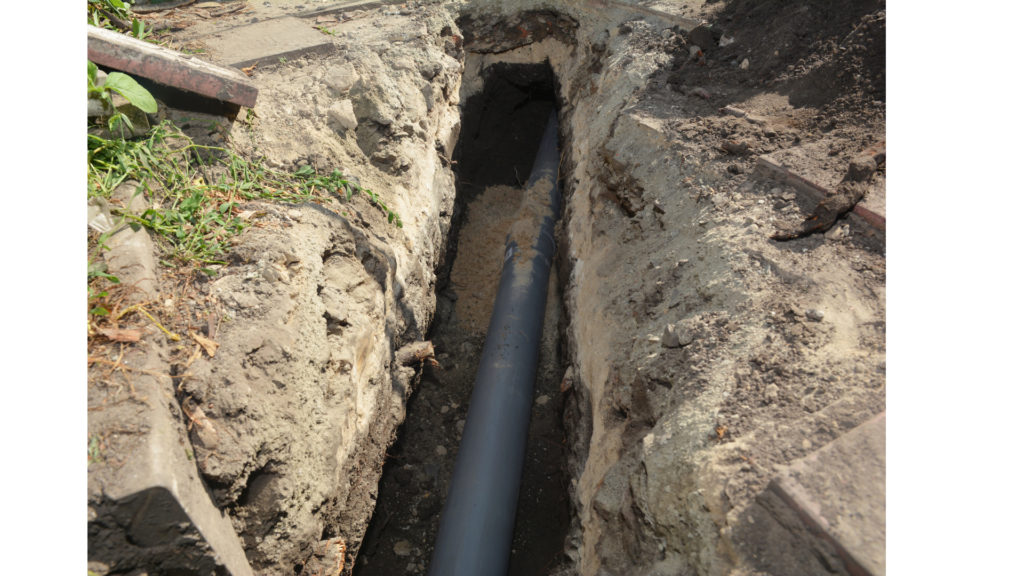
Outside the home, the warning signs are different. A patch of lawn that smells faintly of sewage after rain, or a section of yard that stays soggy when the rest is dry, can indicate a cracked or leaking sewer lateral. Read more about signs of sewer line damage that needs replacement to understand when cleaning won’t be enough and structural repair is needed.
Either way, persistent odors are not normal. They mean wastewater is escaping the system somewhere, either through a vent issue, a cracked drain, or a sewer line that’s no longer fully contained.
Water Backing Up in Unexpected Places
Of all the sewer warning signs, this one is the most urgent. When wastewater can’t move forward through the main line, it backs up to the lowest available opening in the home. In most West Michigan houses, that’s the basement floor drain or a basement shower or laundry tub.
The pattern usually looks like this:
- You run a load of laundry, and clean wash water plus detergent bubbles up through the basement floor drain.
- You flush a toilet on the main floor, and water rises in a basement shower.
- You take a shower, and the basement floor drain fills with gray water.
This is a partial blockage that has progressed past the warning stage. The next event after this, often within days, is a full sewer backup involving raw sewage. If you’re seeing water in your basement that you can’t explain by the appliance running, stop using fixtures and call for help immediately. Our guide on signs your main line is already clogged covers what to do when a backup has already started.
Sewage Smells or Unusually Lush Patches in the Lawn
The sewer lateral runs from your home out to the municipal main, usually buried four to six feet underground. When it cracks, separates at a joint, or develops a root intrusion that’s pushing wastewater into the soil, the lawn above often shows it before you notice anything indoors.
Two outdoor signs are worth watching for:
A patch of grass that’s noticeably greener, taller, or denser than the rest of the lawn often sits directly above a leaking sewer line. Wastewater is fertilizer, and grass roots respond to it. If you have one suspiciously vibrant strip running from the house toward the street, that’s a clue.
Soggy or sunken areas in the yard, especially during dry stretches when the rest of the lawn is firm, indicate that wastewater is saturating the soil. Over time, washout below the line can create a depression as soil collapses into the leak.
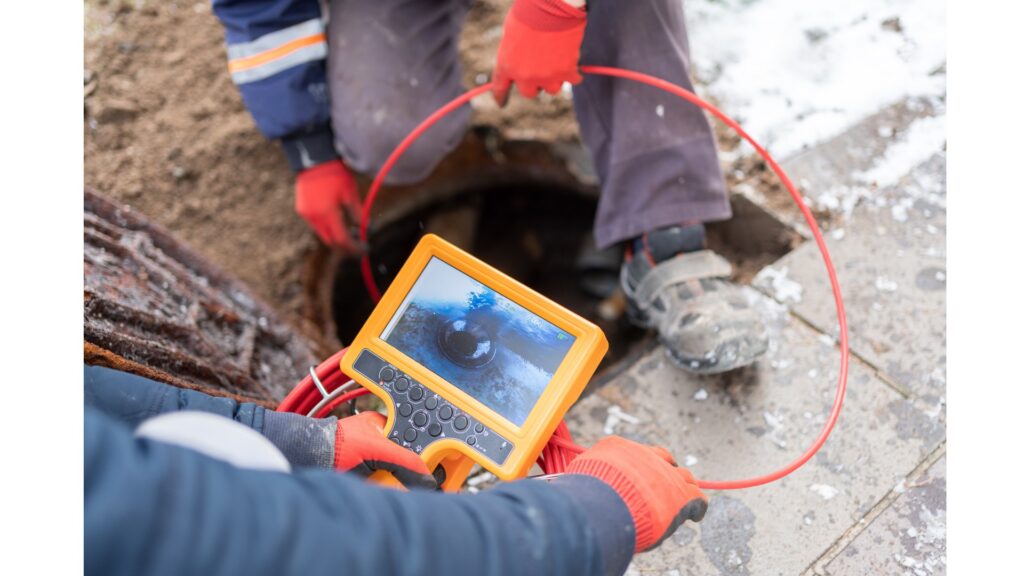
A sewer camera inspection confirms what’s happening underground without digging. The camera travels through the line and shows root intrusion, cracks, separations, and bellies on a live monitor, so you know whether cleaning will resolve the problem or whether deeper repair is needed.
Frequent Drain Clogs in the Same Home
If you’ve snaked the same drain three times this year, or different drains in the same home keep clogging, the issue isn’t the fixtures. It’s the line they all share. Repeated clogs are pattern evidence of a restricted main line, and each new clog clears the immediate symptom without addressing the underlying narrowing.
This is where preventive sewer line cleaning pays off. Mechanical snaking, often called rooter service, cuts through the blockage and restores flow, but it leaves behind grease coating, root remnants, and scale on the pipe walls. Within months, the line collects new material and the cycle starts over.
For homes with recurring clogs, hydro jetting is usually the better cleaning method because it scours the full diameter of the pipe rather than just punching a hole through the obstruction. Read what pipe jetting involves for a deeper look at how the process works and when it’s the right call.
Sewer Cleaning Methods: How They Compare
Not every restricted sewer line needs the same treatment. The right method depends on what’s causing the blockage, the age and material of the pipe, and how aggressive the buildup is. Here’s how the main options compare:
| Method | What It Does | Best For | Limitations |
|---|---|---|---|
| Drain snaking / rooter | Mechanical cable cuts through blockages | Acute clogs, single fixture lines, light root intrusion | Leaves pipe walls coated, doesn’t fully restore diameter |
| Hydro jetting | High-pressure water scours pipe walls clean | Grease, scale, heavy root mass, preventive cleaning | Not ideal for severely damaged or collapsed pipes |
| Camera inspection | Visual diagnosis inside the line | Confirming what’s wrong, locating problem areas | Diagnostic only, doesn’t clear the line |
| Combined approach | Camera first, then jetting or rooter as needed | Unknown conditions, repeat issues, older homes | Higher service complexity |

How Often Should You Schedule Sewer Line Cleaning?
There’s no universal answer because every home is different. A 1920s Heritage Hill home with original clay tile surrounded by maple trees has a very different maintenance need than a 2015 build in a new subdivision. That said, a few general guidelines hold up:
For newer homes with PVC laterals, no large trees nearby, and no history of drain issues, every three to five years is usually sufficient as a preventive measure.
For homes built before 1980, especially those with clay or cast iron laterals, every 18 to 24 months is reasonable. The cost of routine cleaning is far lower than the cost of a sewer backup, water damage cleanup, and emergency excavation.
For homes with a history of repeat clogs, tree-lined lots, or known root intrusion, annual cleaning combined with periodic camera inspection makes sense. You’re managing a known issue rather than waiting for it to escalate.
The best time to schedule is before peak demand, late spring or early fall in West Michigan, when service availability is highest and the system isn’t already stressed by holiday hosting or heavy seasonal use.
Frequently Asked Questions
What’s the difference between drain cleaning and sewer line cleaning?
Drain cleaning addresses clogs in individual fixtures, the kitchen sink, a bathroom drain, a tub. Sewer line cleaning addresses the main line that carries all wastewater from your home to the municipal sewer or septic system. If multiple fixtures are slow or backing up, you need sewer line cleaning, not drain cleaning.
Can I clean my sewer line myself?
Store-bought drain cleaners are designed for fixture-level clogs and won’t reach the main sewer line. They can also damage older pipes, especially cast iron, by accelerating corrosion. Hand augers and snakes available at hardware stores are too short to reach main line blockages, which typically start 15 feet or more from any fixture. Sewer line cleaning requires commercial equipment and is a job for a licensed plumber.
How long does sewer line cleaning take?
A standard sewer line cleaning takes one to two hours depending on access, line length, and the severity of the buildup. Hydro jetting may take slightly longer than mechanical cleaning because it works in passes to fully clean the pipe walls. A camera inspection adds about 30 to 45 minutes.
Will sewer cleaning damage old pipes?
Properly performed cleaning will not damage sound pipes, even older clay or cast iron. The exception is pipe that’s already cracked, separated, or collapsed. A camera inspection before cleaning helps identify these issues so the right method is used. Hydro jetting pressure can also be adjusted for older lines.
Why does my sewer line keep clogging after it’s been cleaned?
Repeat clogs after cleaning usually mean one of two things. Either the cleaning method only punched through the blockage without removing buildup from the pipe walls, leaving material that quickly re-accumulates, or the line has a structural problem like a belly, a crack, or root intrusion at a damaged joint that allows debris to catch repeatedly. A camera inspection is the only way to know which it is.
Is sewer line cleaning covered by homeowners insurance?
Routine maintenance and cleaning are generally not covered by homeowners insurance. Coverage typically applies only to sudden, accidental damage, and even then sewer backup coverage is often a separate rider. Preventive cleaning is considered a homeowner responsibility, like changing furnace filters or servicing a water heater.
Schedule Sewer Line Cleaning in West Michigan
If your home is showing any of the warning signs covered above, slow drains in multiple fixtures, gurgling, persistent odors, or unexplained moisture in the yard, the smart move is to schedule a sewer line inspection before the next backup. A camera inspection identifies exactly what’s happening, and the right cleaning method restores full flow without unnecessary work.
Call (616) 210-3456 to request sewer line cleaning, camera inspection, or hydro jetting service. Our team works across Grand Rapids, Wyoming, Kentwood, Caledonia, Hudsonville, and surrounding West Michigan communities.
About Grapids Home Services
Grapids Home Services has served homeowners across Grand Rapids and West Michigan since 1999, providing HVAC, plumbing, and drain services for homes of every age and size. Our licensed plumbers and drain technicians handle everything from routine sewer line cleaning and camera inspections to hydro jetting and trenchless sewer repair, with a focus on diagnosing problems accurately the first time. We know West Michigan homes, the older clay and cast iron laterals in Heritage Hill, the mature tree canopies in East Grand Rapids, the seasonal stresses our climate puts on every plumbing system, and we bring that local knowledge to every service call.