
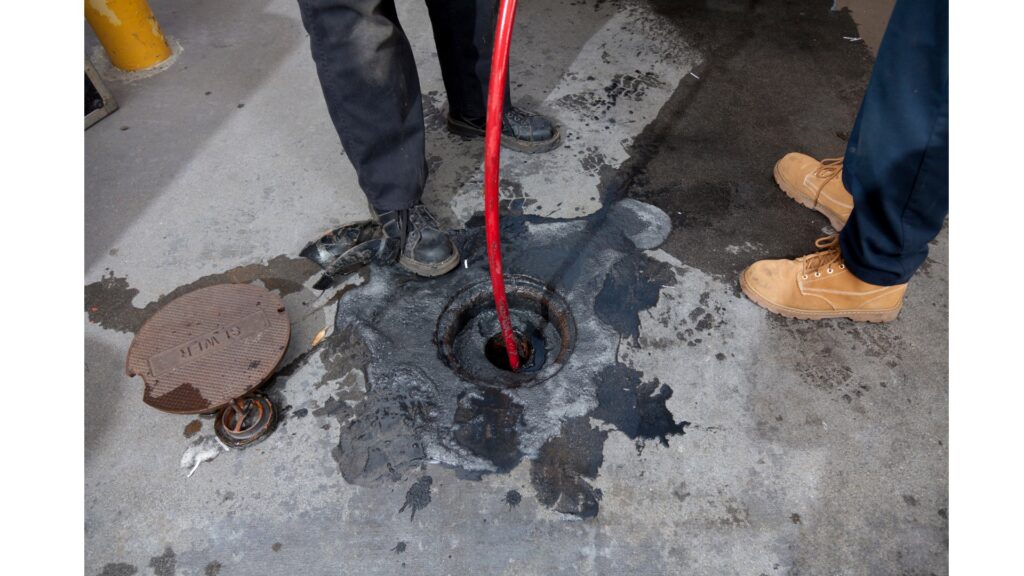
Grand Rapids drains have a tough job. Hard water leaves mineral scale on the inside of every pipe it touches. Mature maple and oak roots reach for the moisture inside aging clay and cast-iron sewer laterals. Winter freeze-thaw cycles shift soil around service lines year after year. Add a few decades of grease, soap, and food waste, and even a well-built West Michigan home can end up with drains that just never run quite right.
Hydro jetting is one of the more powerful answers to that problem. It is also one of the most misunderstood. Plenty of homeowners hear the term, picture a pressure washer for sewers, and either dismiss it as overkill or assume it is the right answer for every slow drain. Neither is correct. Below is a homeowner-focused look at what hydro jetting actually does, the specific warning signs that point to it, when it is the wrong call, and how it compares to traditional drain snaking.
Key Takeaways
- Hydro jetting uses 1,500 to 4,000 PSI of pressurized water to scour the inside of a drain or sewer line, removing buildup that snaking leaves behind.
- A camera inspection should always come before hydro jetting so the plumber can confirm the pipe is structurally sound enough to handle the pressure.
- Recurring clogs, slow drains across multiple fixtures, gurgling, and sewage odors are the strongest signs your Grand Rapids home may benefit from hydro jetting.
- Snaking punches a hole through a clog. Hydro jetting cleans the whole pipe, which is why it lasts longer for grease, scale, and soft root intrusion.
- Hydro jetting is not appropriate for collapsed, severely corroded, or seriously damaged pipes. Those situations need repair, not cleaning.
Hydro Jetting, Explained
Hydro jetting is a drain and sewer cleaning method that sends water through a specialized nozzle at high pressure, typically between 1,500 and 4,000 PSI depending on the pipe and the buildup. The nozzle has forward-facing jets that break apart obstructions and rear-facing jets that pull the hose deeper into the line while scouring the pipe walls in every direction.
The result is a pipe that is not just unclogged, but actually clean. Years of accumulated grease, mineral scale, soap residue, and fine root hairs come away from the walls and flush downstream. For homes on older clay or cast-iron sewer laterals, that interior cleaning often restores flow capacity the pipe has not had in a decade or more. It is closer to a deep clean than a quick fix, which is why it tends to be the go-to solution when ordinary methods stop working.
How Hydro Jetting Works, Step by Step
A professional hydro jetting service is more involved than just turning on a hose. The process generally follows four stages.
- Camera inspection first. A plumber runs a sewer camera inspection through the line to confirm what is causing the problem and to verify the pipe is in good enough condition to handle high pressure. Skipping this step is how older, weakened pipes get damaged.
- Access and setup. The plumber locates a cleanout or accessible point on the drain system and feeds the jetting hose into the line. Pressure settings are calibrated to the pipe material, diameter, and the type of buildup being removed.
- Cleaning pass. Water moves through the nozzle at high pressure. As the hose advances, the rear jets propel it forward while scouring the pipe walls. Grease softens and flushes away, mineral scale fractures off the walls, root hairs shear at the pipe surface, and softer debris liquefies and washes out through the cleanout.
- Verification. After the pass, the camera goes back down the line so the plumber can confirm the pipe is clear and there are no underlying structural issues that need separate attention.
Signs Your Grand Rapids Home May Need Hydro Jetting
Most homeowners do not call about hydro jetting by name. They call about a symptom. The patterns below are the ones that most often point toward hydro jetting rather than a simple drain snake.
- Multiple fixtures draining slowly at once. A slow bathroom sink is a fixture problem. A slow bathroom sink, slow tub, and slow basement floor drain at the same time is a main-line problem. Buildup along the inside of a shared line is one of the most common culprits.
- Recurring clogs in the same drain. If a kitchen line backs up every few months no matter how careful the household is about grease, the issue is almost certainly a layer of hardened grease on the pipe walls that snaking only pushes through. Hydro jetting removes the source.
- Gurgling toilets or drains. Air escaping past partial blockages causes that distinctive gurgle. It usually means a main line is constricted, not fully blocked, which is exactly the situation where hydro jetting outperforms other methods.
- Sewage smell indoors or at the cleanout. Odor often means buildup is trapping waste somewhere along the line. Clearing the pipe walls eliminates the source rather than masking it.
- Frequent main-line backups. When the same backup keeps returning, the line is not actually clear, it is just temporarily open. Anyone seeing the signs of a clogged main line repeatedly should treat hydro jetting as a serious option.
- Mature trees within 20 feet of your sewer lateral. Older West Michigan neighborhoods are full of established trees, and their root systems find the warm, nutrient-rich water inside sewer lines through any tiny crack or joint. For soft root intrusion, hydro jetting cuts the hairs out and clears the line.
For more on what to watch for at the fixture level, see these drain clog warning signs.

Hydro Jetting vs. Drain Snaking, Which One Fits Your Problem?
Drain snaking and hydro jetting solve different problems, even though they share a tool category. A drain snake (or auger) sends a flexible cable into the pipe with a cutting head or hook on the end. It punches a path through a blockage, often pulling the worst of it back out. It is fast, inexpensive, and well-suited to single, localized clogs.
Hydro jetting works differently. Instead of breaking through the clog, it removes everything along the entire stretch of pipe being treated. That distinction matters when the issue is buildup rather than a single obstruction.
| Factor | Drain Snaking | Hydro Jetting |
|---|---|---|
| What it does | Punches through or pulls out a single clog | Cleans the entire pipe wall along the treated section |
| Best for | Isolated clogs (hair, single object, soft blockage) | Grease, scale, soft root intrusion, recurring buildup |
| Effect on pipe walls | Leaves residue on the walls | Removes residue, restoring full pipe diameter |
| How long results last | Often weeks to months for chronic issues | Typically much longer for the same conditions |
| Pre-inspection needed | Helpful but not required | Camera inspection is essential |
| Works on tree roots | Cuts a hole through; roots often regrow quickly | Cuts root hairs off the pipe wall more thoroughly |
| Pipe condition required | Tolerant of weaker pipes | Pipe must be structurally sound |
A useful rule of thumb: snaking is the right answer when there is one clog and the rest of the line is fine. Hydro jetting is the right answer when the line itself is the problem.
Why Grand Rapids Plumbing Sees More Buildup Than Most Cities
A few factors stack up against drains in the Grand Rapids and Kent County area, which is part of why hydro jetting comes up more often here than homeowners might expect.
- Hard water. Municipal water across much of West Michigan is moderately to very hard. Calcium and magnesium dissolved in that water deposit out onto pipe walls over time, the same way they leave white film on a shower door. Inside a drain line, those deposits gradually narrow the usable diameter of the pipe. High-pressure water is one of the few methods that reliably removes mineral scale.
- Aging service lines. A large share of Grand Rapids housing stock predates 1970, and many homes still have their original clay or cast-iron sewer laterals running to the city main. Those materials are durable, but they accumulate roughness on the interior surface that grabs grease, paper, and other waste. Each year of accumulation makes the next clog more likely.
- Tree-root pressure. Older neighborhoods like Heritage Hill, East Grand Rapids, and Eastown have mature canopies that homeowners (rightly) love. The trade-off is dense root systems hunting for moisture. Clay pipe joints, in particular, are vulnerable to fine root hairs threading in and forming a mat that catches everything that passes.
- Freeze-thaw soil movement. Michigan winters move the ground. Cycles of freezing and thawing shift soil around sewer laterals, which can flex pipe joints just enough to open small gaps. Those gaps invite both root intrusion and groundwater infiltration, both of which contribute to buildup downstream.
The combined effect is a region where drain lines tend to accumulate buildup faster than the national average, and where hydro jetting often delivers more noticeable results.
When Hydro Jetting Is Not the Right Call
For all its strengths, hydro jetting is not a universal solution. High-pressure water can damage pipes that are already compromised, which is why a camera inspection is non-negotiable. There are several situations where the answer should be repair, not cleaning.
- Collapsed or severely corroded pipes. A pipe with a section that has lost integrity will not improve with pressure. It will worsen. Cast-iron lines that have rusted through from the inside, clay pipes with shattered sections, and any line with active sinkholes above it need physical repair first.
- Bellied or back-pitched sections. When a section of pipe has sagged below the proper slope, waste collects there regardless of how clean the walls are. Hydro jetting will clear it temporarily, but the underlying geometry needs correction. A camera inspection makes this obvious.
- Major root invasion through broken joints. Hydro jetting handles soft root hairs well. It does not handle a pipe where roots have wedged the joint open and are now structurally embedded. That situation usually calls for sewer line repair and, depending on extent, a section replacement.
- Pipes that already need replacement. When inspection reveals a line that needs a full sewer line replacement, cleaning the existing pipe is not a long-term answer. The right step is to plan the replacement.

How Often Should You Hydro Jet a Home Drain System?
There is no single answer because the right frequency depends on what the line is dealing with. A few useful reference points:
- Most residential homes: Once every 18 to 24 months is a reasonable maintenance interval for older homes with known buildup tendencies. Newer homes with PVC drainage typically need it far less often, sometimes only reactively.
- Homes with mature trees within 20 feet of the lateral: Annual hydro jetting is common because root regrowth is steady. Some homeowners pair it with annual camera inspections to track root activity.
- Homes with a history of grease-related backups: Annual jetting, combined with kitchen-drain habit changes (no liquid grease down the drain, no fibrous food scraps in the disposal), tends to break the backup cycle.
- Homes with no symptoms and no risk factors: No fixed schedule needed. Reactive jetting when problems appear is fine.
If you have not had a camera inspection in the last few years and you live in an older home, that is a useful first step regardless of whether hydro jetting ends up being the right next move. It establishes a baseline so you know whether you are dealing with buildup, structural issues, or both.
Frequently Asked Questions
Is hydro jetting safe for older pipes in Grand Rapids homes?
It can be, but only after a camera inspection confirms the pipe is structurally sound. For older cast-iron or clay lines, the inspection step is essential. A skilled plumber adjusts pressure based on pipe condition, and refuses to jet pipes that show too much wear.
Does hydro jetting damage tree roots permanently?
Not entirely. Hydro jetting removes the root mass currently inside the pipe and cuts the hairs flush with the pipe wall. The tree continues to grow, so roots can return through the same entry point. That is why root-prone homes often pair jetting with periodic maintenance and, eventually, repair of the entry point itself.
How long does a hydro jetting appointment take?
A standard residential lateral typically takes 1 to 3 hours, including the camera inspection before and after. Larger homes, multiple problem areas, or heavy buildup can extend that timeline.
Can I rent a hydro jetter and do it myself?
Small consumer-grade jetters exist, but they operate at a fraction of the pressure professional equipment uses and lack the nozzle variety needed to handle different conditions. More importantly, jetting a pipe without first inspecting it with a camera risks serious damage to an already-weakened line. This is not a recommended DIY job.
Will hydro jetting fix a slow bathroom sink?
Usually not, because a slow bathroom sink is almost always a localized clog (hair, soap, toothpaste residue) in the trap or short branch line. Snaking or a thorough drain clearing service is the appropriate response. Hydro jetting comes into play when the issue is in the main drain or sewer lateral.
How is hydro jetting different from chemical drain cleaners?
Chemical drain cleaners use harsh reactions to dissolve organic material, and they can erode pipe interiors over time. They also tend to fail against grease, scale, and roots. Hydro jetting uses only water, treats the entire pipe rather than a single spot, and does not introduce chemicals into the system.
Schedule Hydro Jetting in Grand Rapids
If recurring clogs, slow drains, or main-line backups are part of life at your Grand Rapids home, hydro jetting may be the step that finally breaks the cycle. The right starting point is a camera inspection so the line gets diagnosed before it gets cleaned. Call (616) 210-3456 or contact us to schedule a hydro jetting service or a sewer camera inspection for your home.
About Grapids Home Services
Grapids Home Services has served Grand Rapids, Kent County, and the surrounding West Michigan communities since 1999, providing heating, cooling, plumbing, and drain services to homeowners across the region. Background-checked technicians handle everything from routine maintenance to complex sewer and drain work, with the local knowledge that comes from decades of working on West Michigan housing and infrastructure. The team approaches every drain problem the same way: diagnose first, treat second, and recommend only what the pipe actually needs.