When your furnace starts blowing cold air on a frigid Grand Rapids night, the situation can go from uncomfortable to urgent in a matter of hours. West Michigan winters are no joke. With temperatures regularly dipping below 10 degrees Fahrenheit from December through February, a forced air system that pushes cold air instead of heat is more than an inconvenience. It is a problem that demands quick answers.
The good news is that a furnace blowing cold air does not always mean a costly repair or replacement. Many of the most common causes are straightforward, and some can be resolved without a service call. Others do require a licensed HVAC technician, and knowing the difference can save you time, money, and a very cold night.
At Grapids Home Services, we have helped Grand Rapids, Wyoming, Kentwood, and West Michigan homeowners diagnose and repair furnace problems for years. This guide covers the most common reasons your furnace may be pushing cold air and what you can do about each one.
Why Furnaces Blow Cold Air in Grand Rapids Winters
Furnaces are designed to heat air and distribute it through your home via ductwork. When the system malfunctions, it can continue blowing air through the vents without heating it, or it may push the ambient air already in your ducts out into your living spaces. Either way, the result is cold or room-temperature air coming from your registers.
Grand Rapids and the surrounding area present specific challenges for forced air heating systems. The rapid temperature swings common in West Michigan, combined with the city’s older housing stock in neighborhoods like Heritage Hill, Midtown, and Creston, mean that aging furnaces are working harder than ever. Understanding why your furnace is blowing cold air starts with a basic knowledge of how the system is supposed to work.
A properly functioning furnace draws in air, heats it over a heat exchanger using a gas burner or electric element, and then distributes it through your home’s duct system. If any part of that sequence breaks down, the blower fan may still run and move air while the air goes unheated. The most common failure points fall into a handful of well-known categories.
Common Causes of a Furnace Blowing Cold Air
Several distinct issues can cause your furnace to deliver cold air instead of heat. Here are the most frequently encountered causes for homeowners across the Grand Rapids area.
- Thermostat set to “Fan On” instead of “Auto”: When the thermostat fan setting is switched to “On,” the blower runs continuously, even when the furnace is not actively heating. The air coming from your vents between heating cycles will feel cold or room temperature. Switching the fan setting back to “Auto” resolves this immediately.
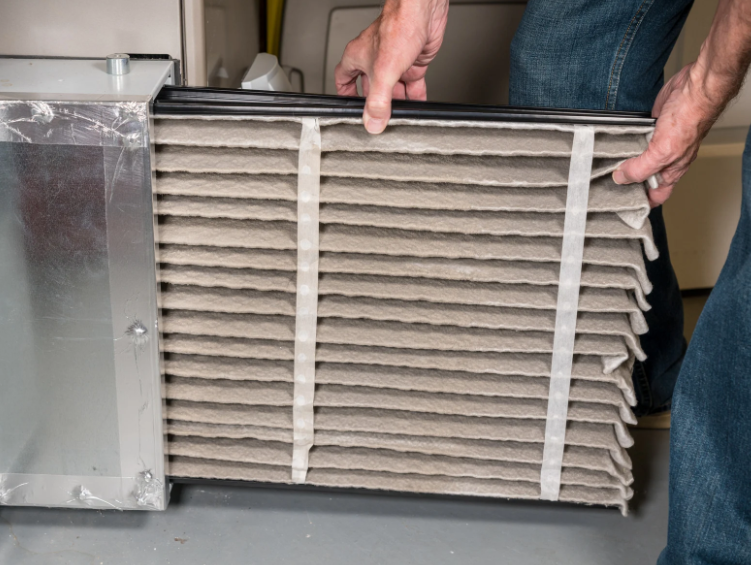
- Dirty or clogged air filter: A severely restricted air filter starves the furnace of return air, causing the heat exchanger to overheat. Most modern furnaces have a high-limit safety switch that shuts down the burner when this happens, but the blower keeps running to cool things down. The result is cold air flowing continuously. Replacing a clogged filter is the first thing to check.
- Pilot light or ignition failure: On older furnaces with a standing pilot, the pilot flame can go out due to drafts, a dirty thermocouple, or gas supply interruptions. On newer furnaces with electronic ignition, a faulty igniter or control board can prevent the burner from lighting. The blower activates as normal, but with no combustion happening, the air stays cold.
- Overheated furnace triggering the high-limit switch: If the furnace overheats due to restricted airflow, a blocked vent, or a malfunctioning component, the high-limit switch cuts power to the burner as a safety measure. The blower continues running to dissipate heat, circulating unheated air until the system cools and attempts to restart.
- Gas supply interruption: A closed shutoff valve, a tripped gas meter, or a supply interruption from the utility can cut off the fuel the furnace needs to generate heat. The system will go through its startup sequence and the blower will activate, but combustion will never occur and only cold air will emerge.
- Cracked heat exchanger: A cracked heat exchanger is one of the more serious furnace problems. The heat exchanger is the metal component that transfers heat from combustion gases to your home’s air supply. A crack can allow combustion byproducts, including carbon monoxide, to mix with the circulating air. Safety controls typically shut down the burner when this is detected, leaving the blower running without heat.
- Condensate drain blockage on high-efficiency furnaces: High-efficiency furnaces produce condensation as a byproduct of combustion. This condensate drains away through a PVC line. When that drain line becomes clogged, the furnace shuts down on a safety switch, leaving only cold air blowing through your vents.
- Ductwork leaks: Significant leaks in the duct system, especially in unconditioned spaces like attics, crawlspaces, or garages, can allow cold outside air to mix with heated air before it reaches your living spaces. The furnace may be functioning correctly while the delivery system undermines the warmth.
How to Troubleshoot a Furnace Blowing Cold Air
Before calling for a service visit, there are several checks you can perform on your own. Working through these steps methodically can either resolve the problem or give you more useful information when you do call a technician.
Start with your thermostat. Verify that it is set to Heat, not Cool, and that the fan is set to Auto rather than On. Confirm the temperature setting is above the current indoor temperature by at least a few degrees. If your thermostat uses batteries, replace them, as a weak battery can cause erratic behavior in some models.
Next, locate your furnace filter and inspect it. Most Grand Rapids homes have 1-inch to 4-inch filters in a slot at the furnace or in a return air grille on the wall. If the filter is visibly gray, dense with debris, or you cannot see light through it when held up, replace it immediately. Filters for most residential furnaces should be changed every one to three months depending on your household and the filter type.
Check that your furnace’s power switch, usually a standard wall switch located near the unit, is in the On position. Confirm the furnace door or access panel is fully closed, as many furnaces have a safety interlock that cuts power when the door is open. Look for any error codes on the furnace control board display if your unit has one.
For gas furnaces, verify that the gas shutoff valve on the supply line to the furnace is open. The valve is open when the handle runs parallel to the pipe. If you have a standing pilot furnace, check whether the pilot light is lit. If it is out, follow the manufacturer’s relighting instructions printed on the furnace door. If the pilot will not stay lit after three attempts, a faulty thermocouple is the likely culprit and will require a professional repair.
If none of these steps restore heat, it is time to call a professional. The remaining causes, from ignition component failures to heat exchanger cracks, require diagnostic equipment and licensed furnace services to address safely and correctly.
When to Call a Professional for Furnace Repair

Some furnace issues fall within a capable homeowner’s ability to diagnose and fix. Others are best left to a licensed HVAC technician, both for safety reasons and because incorrect repairs can create bigger problems. The following situations warrant a professional service call.
The furnace repeatedly shuts off and restarts in short cycles. This pattern typically points to an overheating problem, a malfunctioning flame sensor, or a control board issue that requires specialized diagnostic equipment to isolate.
You notice a sulfur or rotten egg odor near the furnace or gas lines. This is a potential gas leak, which is a safety emergency. Leave the home immediately, avoid operating any electrical switches, and call your gas utility from outside before calling for emergency HVAC services.
Your furnace is showing error or fault codes. Modern furnaces communicate failure modes through LED flash patterns or digital displays. While some codes point to simple issues like a dirty filter, others indicate component failures that require parts and professional installation.
The furnace is more than 15 years old and showing signs of heat exchanger wear. A cracked heat exchanger is a carbon monoxide risk that should be evaluated immediately. If your furnace is aging and showing reduced performance, combining a repair call with a conversation about replacement is often the most cost-effective approach for West Michigan homeowners.
Grapids Home Services provides diagnostic and repair service throughout the Greater Grand Rapids Area, including Kent County, Ottawa County, and surrounding communities. Our technicians carry the equipment and parts needed to diagnose most furnace services issues on the first visit.
Keeping Your Furnace Running All Winter in West Michigan
The best time to discover a furnace problem is before the temperatures drop, not during the first cold snap of the season. West Michigan homeowners can take several practical steps to reduce the likelihood of a mid-winter heating failure.
Schedule a professional tune-up each fall before the heating season begins. A technician will inspect and clean the burner assembly, test ignition components, check the heat exchanger for cracks, verify safety controls are operating correctly, and measure combustion efficiency. Catching a developing problem in October is far less disruptive than dealing with a breakdown in January. Ask about our maintenance plan to keep your system on a regular service schedule.
Replace your furnace filter on a consistent schedule. For standard 1-inch filters, every 30 to 60 days is appropriate for most households in Grand Rapids. Homes with pets, multiple occupants, or renovation projects should lean toward the shorter interval. Thicker 4-inch media filters can typically go three to six months between changes, but checking them monthly during peak heating season is still worth the two minutes it takes.
Keep the area around your furnace clear. Combustion air intakes, exhaust vents, and the furnace itself need adequate clearance from stored materials and debris. Check your outdoor exhaust and intake pipes for obstructions from leaves, ice, or animal nesting, which are common issues for Grand Rapids homes with 90-plus percent efficient furnaces that vent through PVC pipes in the exterior wall.
Consider a programmable or smart thermostat if you are still using a manual model. Setting temperature setbacks during sleeping hours and while the home is unoccupied reduces the load on your furnace while still maintaining comfortable temperatures when you need them. It also reduces the risk of the system being pushed beyond its capacity during the coldest parts of a West Michigan winter.
Our HVAC services team at Grapids Home Services is available for annual tune-ups, emergency repairs, and full system replacements across the Greater Grand Rapids region.
Frequently Asked Questions
Why is my furnace blowing cold air when the thermostat is set to heat?
If the thermostat is correctly set to heat and the temperature is above the current indoor reading, the most likely culprits are a clogged air filter causing the high-limit switch to trip, a failed igniter or flame sensor preventing combustion, or a gas supply interruption. Start by checking the filter, then inspect the furnace for error codes. If neither resolves the issue, a technician can diagnose the ignition or gas supply problem directly.
How do I know if my furnace filter is causing cold air to blow?
A filter-related shutdown usually produces a pattern where the furnace starts normally, the blower activates, but the heat shuts off after a few minutes while the blower continues running. If the registers are putting out cold air and the filter has not been changed in several months, pull it out and inspect it. A gray, dense, or visibly restricted filter is almost certainly contributing to the problem. Replace it and give the furnace 30 minutes to reset before testing again.
Can a furnace blowing cold air be a sign of a serious safety issue?
Yes, in some cases. A cracked heat exchanger can cause the furnace’s safety controls to cut burner operation while the blower continues running. This is a carbon monoxide hazard and should be treated as a priority repair. Additionally, a gas leak that has interrupted fuel supply is a safety concern. If you smell gas near the furnace, leave the home immediately and call your utility company and a licensed HVAC technician before re-entering.
How long does a furnace repair typically take in Grand Rapids?
Most common furnace repairs, including igniter replacement, flame sensor cleaning, thermocouple replacement, and filter-related issues, can be completed within one to two hours on a standard service visit. More involved repairs involving control boards, gas valves, or heat exchanger evaluation may require additional diagnostic time or parts sourcing. Grapids Home Services technicians come stocked with common replacement components to minimize return visits.
Should I replace my furnace or repair it if it is blowing cold air?
The decision depends primarily on the age of the unit and the cost of the repair. If your furnace is under 10 years old and the repair is under $500, repair is almost always the right choice. If the unit is 15 to 20 years old and facing a major component failure such as a heat exchanger or inducer motor, replacement often delivers better long-term value. Our team can assess your specific situation and give you an honest recommendation based on the repair cost versus the remaining expected lifespan of your equipment.
What is the most common reason a furnace blows cold air in winter?
For Grand Rapids homeowners, the most commonly encountered cause is an overheated furnace triggering the high-limit safety switch due to a dirty or clogged air filter. The fix is straightforward: replace the filter and allow the furnace time to reset. The second most common cause is a thermostat fan setting left on “On” rather than “Auto,” which circulates air continuously regardless of whether the furnace is actively heating. Checking both of these first can resolve the problem without a service call.
About Grapids Home Services
Grapids Home Services has been keeping Grand Rapids and West Michigan homes warm and comfortable with expert heating services and comprehensive HVAC services. From furnace repair and installation to air conditioning, heat pumps, and full seasonal tune-ups, our licensed technicians deliver the expertise and local knowledge that West Michigan homeowners trust. We serve Grand Rapids, Wyoming, Kentwood, Grandville, Jenison, Rockford, and communities throughout Kent, Ottawa, and surrounding counties.
Call Grapids Home Services at (616) 210-3456 to schedule service today.