
Spring in Greater Grand Rapids is a season of dramatic change. After months of subfreezing nights, frozen ground, and heating systems running around the clock, West Michigan homeowners face a short window each April and May before summer humidity and air conditioning demands begin. That transition period is the single best time of year to give your HVAC system the attention it needs.
Skipping spring maintenance is a common mistake that leads to preventable breakdowns in July, reduced system efficiency throughout the cooling season, and shorter equipment lifespan overall. A trained HVAC technician can catch problems before they become costly repairs, but many of the most important checks are straightforward enough for homeowners to complete themselves.
This spring HVAC maintenance checklist is organized into DIY tasks you can complete in an afternoon and professional service items that are worth scheduling before the warm season starts. Use it to get ahead of the summer cooling rush and keep your Greater Grand Rapids home comfortable from May through September. If you work through the list and want a professional to handle the rest, Grapids Home Services is ready to help.
Why Spring Is the Right Time for HVAC Maintenance in West Michigan
Michigan HVAC systems take a beating in winter. Furnaces and heat pumps run for hundreds of hours under sustained load from November through March, and that continuous operation creates wear on components that would not be visible without inspection. By the time spring arrives, filters are heavily loaded, heat exchangers have gone through thousands of thermal cycles, and blower motors have accumulated months of dust.
Spring maintenance matters for a second reason specific to West Michigan: the gap between heating season and cooling season is short. In Grand Rapids, it is not unusual for the furnace to run in early April and the air conditioner to run by late May. That leaves a narrow window to catch deferred issues before you are asking your cooling system to perform at full capacity during a warm stretch.
Finally, scheduling HVAC service in spring means you are not competing with everyone else in the region who waited until their AC stopped working in July. Appointment availability is better, response times are faster, and you have time to make informed decisions about any repairs or replacements rather than making rushed calls during a heat event.
DIY Spring HVAC Maintenance Checklist

The following tasks require no special tools or certifications. Set aside two to three hours on a Saturday morning and work through the list systematically.
Replace or inspect the air filter. If you have a one-inch pleated filter, replace it now regardless of when you last changed it. West Michigan’s spring pollen season and cottonwood fluff from late May can clog filters faster than the manufacturer’s suggested interval. A fresh filter at the start of cooling season protects your evaporator coil and keeps airflow strong.
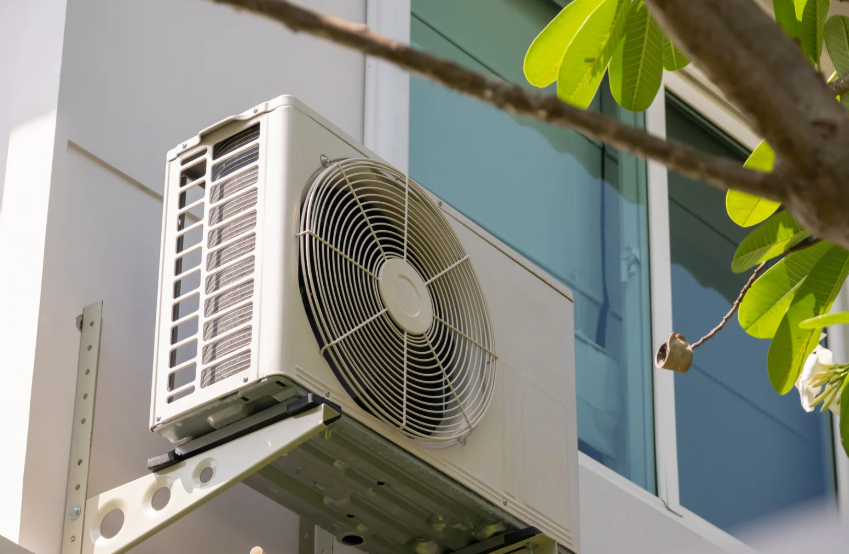
Clear the area around your outdoor condenser unit. Over winter, leaves, debris, and dirt accumulate around and inside the outdoor cabinet. Remove any plant growth, sticks, or mulch within two feet of the unit. Use a garden hose to gently rinse dirt and debris from the exterior fins, working from top to bottom. Never use a pressure washer on the fins.
Check and test the thermostat. Switch the thermostat from Heat to Cool and lower the set temperature below the current room temperature. Confirm the outdoor unit starts and that cold air begins flowing within a few minutes. If you have a programmable or smart thermostat, review and update your cooling schedule for summer.
Open and unblock all supply and return vents. Walk through every room and confirm vents are open and unobstructed. Furniture, rugs, and curtains placed over return air vents during winter rearrangements restrict airflow and reduce system efficiency. Closing vents in unused rooms does not save energy and actually increases pressure on the system.
Clear the condensate drain line. The condensate drain removes moisture pulled from indoor air during cooling. Over winter, algae, mold, and debris can partially block the line, leading to water overflow and potential water damage. Locate the drain line access port near your air handler and flush it with a cup of distilled white vinegar or diluted bleach.
Test your carbon monoxide detector and smoke alarms. Spring is an ideal time to test life-safety equipment and replace batteries. If you have combustion appliances such as a gas furnace, water heater, or boiler, a working CO detector is essential.
Inspect visible ductwork in your basement or utility room. Look for disconnected joints, obvious gaps, or sections of duct tape that have dried and peeled away. In older West Michigan homes, ductwork connections can loosen over years of thermal expansion and contraction. Even small leaks waste conditioned air and raise your energy bills.
Professional Spring HVAC Service Checklist
Some tasks require specialized tools, refrigerant certification, or access to electrical components that should not be handled without training. A professional spring AC tune-up from a licensed HVAC technician typically covers all of the following.
Check refrigerant charge and inspect for leaks. Refrigerant does not get consumed like fuel. If your system is low, there is a leak somewhere. A technician can check the refrigerant charge with a manifold gauge set and use electronic leak detection equipment to find and repair any leaks before they worsen. Handling refrigerant requires EPA certification.
Clean the evaporator and condenser coils. Coil cleaning requires chemical coil cleaner, proper containment for runoff, and knowledge of which coil surfaces can tolerate different cleaners. Clean coils transfer heat dramatically more efficiently than dirty ones, and this single item can recover several percentage points of efficiency on older systems.
Inspect and test the capacitors. Run capacitors are consumable parts that help the compressor and fan motor start and maintain speed. They degrade over time and Michigan’s summer heat accelerates that process. A technician can test capacitor microfarad ratings and replace any that are outside specification before they fail mid-season.
Lubricate moving components. Blower motors and fan motors with oil ports need lubrication at least annually. Dry bearings run hot, consume more electricity, and fail prematurely. This is a quick task for a technician that meaningfully extends motor life.
Test safety controls and electrical connections. Loose electrical connections are a leading cause of compressor failure and are invisible without removing panels. A technician will check voltage and amperage on all motors, tighten electrical connections, and test safety switches and limit controls.
Inspect the heat exchanger on your furnace. If you have a gas furnace, a cracked heat exchanger is a serious safety concern because it can allow combustion gases including carbon monoxide to enter your living space. Spring, when the furnace is transitioning out of its heavy-use season, is a logical time to have it inspected. A visual inspection and combustion analysis are both part of a comprehensive furnace tune-up.
Spring Maintenance for Your Heating System
Spring maintenance is not only about the air conditioner. Your furnace or heat pump has just come through its most demanding season and deserves attention too, even if you plan to leave it idle until October.
For gas furnaces, shut off the gas supply and clean around the burner assembly. Check the flue vent pipe for any bird nests, wasps, or debris that accumulated during winter. Ensure the combustion air intake is clear. If the furnace is more than 15 years old and showing signs of reduced efficiency or increasing repair frequency, spring is an ideal time to have an honest conversation about whether replacement makes more sense than another season of patches.
For heat pumps, spring service is more urgent because heat pumps run in both heating and cooling modes. The outdoor unit needs the same coil cleaning and refrigerant check as a central air conditioner, plus a check of the reversing valve that switches the system between heating and cooling. A heat pump that performed well in heating mode all winter can still have a reversing valve issue that prevents it from switching to cooling mode effectively.
West Michigan homeowners who have enrolled in a maintenance plan typically have spring service included automatically. If you are not on a plan, scheduling a standalone tune-up in March or April before the peak season ensures your system gets attention while HVAC technicians have greater availability.
Spring Indoor Air Quality Checklist

Greater Grand Rapids has some of the highest seasonal pollen counts in Michigan. Tree pollen peaks in April, grass pollen peaks in May and June, and cottonwood fluff fills the air in late May. For households with allergy sufferers, spring HVAC maintenance should include steps specifically aimed at reducing airborne particles and improving indoor air quality.
Consider upgrading to a higher-MERV filter. Standard one-inch filters with a MERV rating of 7 or 8 capture most large particles but allow finer allergens through. A MERV 11 or 13 filter captures significantly more pollen and mold spores. Check that your system can support the increased static pressure before upgrading, as very high-MERV filters can restrict airflow on systems not designed for them.
Have your ductwork inspected for mold. Wet winters followed by warm springs create conditions where mold can develop in ductwork, especially in sections running through unconditioned spaces. If anyone in the household has developed unexplained respiratory symptoms or if you notice musty odors when the system runs, duct inspection is worth scheduling.
Evaluate whole-home humidity control. West Michigan summers are notably humid, and an air conditioner alone may not keep indoor humidity at a comfortable level, particularly in homes with concrete basements or crawl spaces. Whole-home dehumidifiers and indoor air quality solutions integrated with your HVAC system can dramatically improve comfort and protect wood floors, furniture, and finishes from moisture damage.
What to Do if Your AC Did Not Make It Through Winter
Spring is when many Greater Grand Rapids homeowners discover their aging air conditioner is not going to make it through another summer. If your system is 12 to 15 years old and showing signs of serious problems, spring is actually a good time to plan for replacement rather than an emergency.
The signs that point toward replacement rather than repair include a system that required refrigerant additions last summer, compressor or heat exchanger failures, systems still running on R-22 refrigerant (which is no longer manufactured), and equipment that needs a repair costing more than roughly one-third of the price of a new system.
Modern air conditioning systems are substantially more efficient than equipment from even a decade ago. A new system installed in spring gives you a full season of reliable performance data, and many manufacturers and utilities offer rebates for high-efficiency installations that are easier to coordinate before the urgency of summer sets in.
Grapids Home Services provides air conditioning installation and replacement throughout Grand Rapids, Wyoming, Kentwood, Grandville, Jenison, Lowell, and all of West Michigan. Our licensed team can walk you through system options, sizing considerations, and available incentives to help you make the right decision for your home and budget.
Spring HVAC Maintenance Timeline for West Michigan
Timing matters when it comes to spring HVAC service in Greater Grand Rapids. Here is a practical month-by-month breakdown to help you stay ahead of the season.
- March: Schedule your professional HVAC tune-up now before spring appointment demand increases. Replace your furnace filter, clear the area around outdoor equipment of any debris that accumulated over winter, and test CO detectors.
- April: Complete your professional AC tune-up. Check condensate drain lines, inspect ductwork for obvious leaks, and switch the thermostat to Cool for the first test run of the season. Open all vents and remove any furniture that may have shifted over interior vents.
- May: Warm weather arrives quickly in West Michigan. By early May your AC may be running daily. Address any issues identified during April’s tune-up before peak season. Consider installing or evaluating whole-home humidity control if last summer’s indoor air quality was uncomfortable.
Frequently Asked Questions
How often should I have my HVAC system serviced in Greater Grand Rapids?
Most HVAC professionals recommend at least two service visits per year: one in spring before cooling season and one in fall before heating season. Greater Grand Rapids homeowners who rely on both air conditioning in summer and a furnace or heat pump in winter benefit from both service windows. Annual service on a single-season system is the minimum recommended maintenance interval.
What is included in a professional spring HVAC tune-up?
A thorough spring tune-up typically includes refrigerant level check and leak inspection, evaporator and condenser coil cleaning, capacitor testing, motor lubrication, electrical connection inspection, thermostat calibration, condensate drain flush, and a full system operation test. Some providers also include duct inspection and filter replacement as part of the visit.
Is it worth getting a maintenance plan for my HVAC system?
For most Greater Grand Rapids homeowners, a maintenance plan is a practical investment. Plans typically include scheduled spring and fall tune-ups, priority scheduling during peak demand periods, discounts on repairs, and sometimes warranties on covered components. The consistent service keeps your system running at peak efficiency, which lowers monthly energy costs and reduces the risk of unexpected failures.
What temperature is too cold to run an air conditioner in West Michigan?
Most standard central air conditioners are designed to operate at outdoor temperatures above 60 degrees Fahrenheit. Running the system when outdoor temperatures fall below that threshold risks damaging the compressor because the refrigerant pressure is too low to lubricate the compressor properly. In early spring, wait until outdoor temperatures are consistently above 60 degrees before testing the AC. If you need cooling during a warm day followed by cold nights, use a ceiling fan or open windows at night instead.
How do I know if my HVAC system needs to be replaced rather than repaired?
General guidance is to compare the repair cost against the system’s age and a new system’s price. If the repair cost exceeds one-third of the replacement cost and the system is more than 12 to 15 years old, replacement often makes more financial sense. Other factors pointing toward replacement include repeated breakdowns in a single season, refrigerant leaks on older R-22 systems, declining efficiency causing noticeably higher energy bills, and declining indoor comfort despite the system running.
Why does my air conditioner smell musty when it first runs in spring?
A musty smell when you first run the AC in spring is usually caused by mold or mildew that has grown on the evaporator coil or in the drain pan during winter dormancy. In most cases it clears up after the system runs for an hour as the coil dries and airflow moves through the duct system. If the odor persists, the coil may need professional cleaning and the condensate drain line should be inspected and flushed. Persistent musty air can also indicate mold growth inside the ductwork itself.
About Grapids Home Services
Grapids Home Services has been helping Grand Rapids and West Michigan homeowners keep their homes comfortable and running smoothly with expert plumbing and HVAC services. From spring and fall tune-ups to emergency repairs, furnace replacements, and indoor air quality solutions, our licensed team brings the experience and local knowledge that West Michigan homeowners trust. We serve Grand Rapids, Wyoming, Kentwood, Grandville, Jenison, Lowell, and communities throughout Kent and Ottawa counties.
Call Grapids Home Services at (616) 210-3456 to schedule service today.